
Packing for a Train Trip in France: Everything You Need to Know About SNCF's Luggage Policy

Introduction
Traveling through France by train is one of the most scenic and convenient ways to explore the country. But on my last trip with SNCF’s TGV INOUI, I learned an important lesson about their luggage policy—the hard way.
It all started while I was packing for my journey from Thailand to France. As someone who likes to be prepared for every situation, I ended up bringing far more than I actually needed. For two people, we had three large suitcases, two carry-ons, a crossbody bag, and two backpacks filled with souvenirs from previous stops. I didn’t think much of it at the time—I had taken trains before and often seen passengers traveling with multiple bags.
When I arrived at the station, I confidently made my way to the platform and boarded the train without any concerns. After finding my seat, I quickly realized that the designated luggage areas were filling up fast. I managed to fit my largest suitcase into a storage space, but my remaining bags took up more room than I had expected.
Just as I was settling in, a ticket inspector approached and asked to check my luggage.
That’s when reality hit—I had exceeded the allowed luggage limit.
SNCF’s policy permits each passenger to bring two pieces of luggage and one piece of hand luggage, all properly labeled. Anything beyond that can result in additional fees. The inspector informed me that I would need to pay €50 for my extra bag.
Reluctantly, I paid the fee—lesson learned. If I had checked the luggage policy beforehand, I could have packed more efficiently or used SNCF’s luggage delivery service, Mes Bagages, to avoid the hassle altogether.
Looking back, the policy makes sense. Overcrowded luggage spaces can create inconvenience and safety issues for everyone on board. While it was an unexpected expense, it was also a valuable reminder. Now, I always double-check baggage rules before traveling.
So if you’re planning a trip with SNCF, take it from me—pack smart, label your bags, and stay within the limits. Your journey (and your wallet) will be much smoother.
My Experience Traveling with Too Much Luggage on SNCF
While preparing for our trip from Thailand to France, I packed far more than we actually needed.
For two people, we brought:
- three large suitcases,
- two carry-ons,
- two backpacks,
- and a crossbody bag filled with travel essentials and souvenirs.
At the station, everything seemed normal. We boarded the TGV INOUI train without any issues and searched for luggage space near our seats.
That’s when I noticed how quickly the luggage racks filled up.
I managed to squeeze one large suitcase into the storage area near the entrance, but the rest of our bags ended up taking more space than expected. A few minutes later, a ticket inspector walked down the aisle and stopped beside us.
She explained that SNCF allows each passenger:
- two pieces of luggage,
- plus one small hand item.
We had exceeded the limit.
The result? A €50 fine for our extra luggage.
It was frustrating at the time, but honestly, I understood the reasoning after seeing how crowded the train became. Oversized or excessive baggage can easily block storage areas and make boarding difficult for other passengers.
Since then, I always check luggage policies before traveling by train in Europe.
Standard Luggage Allowance
Standard Luggage Allowance:
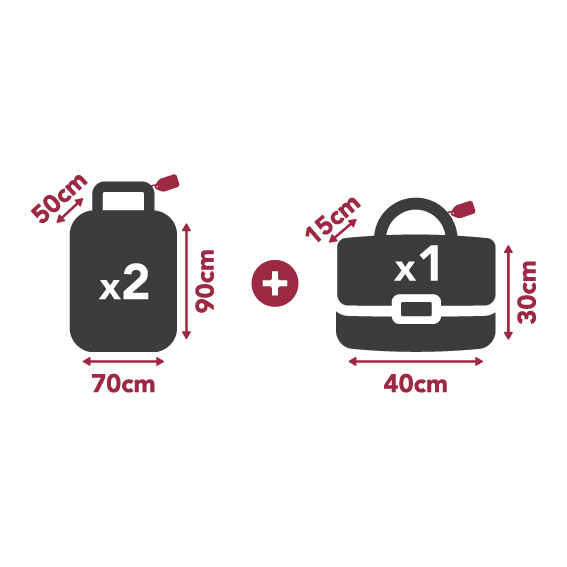
- Number of Items: Each passenger is permitted to bring up to two pieces of luggage and one piece of hand luggage.
- Dimensions:
- Luggage: Maximum size of 70 x 90 x 50 cm.
- Hand Luggage: Maximum size of 40 x 30 x 15 cm.
Special Items
Special Items:
In place of one standard luggage item, you may bring one special item, such as:
- Musical Instruments: Must be in a labeled case, not exceeding 90 x 130 x 50 cm.
- Folded Bicycles or Scooters: Should be folded and stored in a labeled cover, with dimensions not exceeding 90 x 130 x 50 cm.
- Skis or Snowboards: Must be in a labeled cover. There is no size limit for skis, but only one pair per passenger is allowed.
- Strollers: Must be folded and stored in designated luggage areas.
Labeling and Responsibility
Labeling and Responsibility:
- All luggage items must be labeled with your first and last name, mailing address, and a phone number or email address.
- You are responsible for your luggage throughout the journey.
Storage Onboard
Storage Onboard:
- Hand Luggage: Store at your feet, under your seat, or in overhead racks.
- Larger Items: Place in designated luggage areas at the entrance or center of your coach, or in spaces between certain back-to-back seats.
Non-Compliant Luggage
Non-Compliant Luggage:
Starting from September 16, 2024, passengers not adhering to these luggage policies may face fines:
- €50 for one non-compliant or excess item.
- €100 for two non-compliant or excess items.
- €150 for three or more non-compliant or excess items.
These measures aim to enhance passenger comfort and safety by preventing obstructions and ensuring efficient use of space.
Additional Services
Additional Services:
Luggage Delivery: SNCF offers a "Mes Bagages" service, allowing you to have bulky luggage delivered to your chosen address, ensuring a hassle-free travel experience.By following these guidelines, you can ensure a smooth and pleasant journey aboard TGV INOUI trains.
Where to Store Luggage on TGV INOUI Trains
Storage space on French high-speed trains can fill up surprisingly quickly, especially during:
- holidays,
- weekends,
- and peak tourist seasons.
Small Bags
Store:
- under your seat,
- in overhead racks,
- or at your feet.
Large Suitcases
Use:
- luggage racks near coach entrances,
- central luggage areas,
- or designated spaces between certain seats.
If you board late, available storage space may already be limited.
FAQs (Frequently Asked Questions)
In most cases, luggage is not weighed. Inspectors mainly focus on the number of items and whether luggage appears excessively large or obstructive.
Yes. Larger backpacks may count as one luggage item depending on their size.
Final Thoughts
If you’re planning to travel across France by train, my advice is simple: pack lighter and check the luggage rules before departure.
You may like
Read more:
💙 Train Travel in France (2026): Updated SNCF Luggage Rules & Smart Packing Tips

.png)
